
If you’ve seen “Trump ACA refund checks” in the news this week, here is the short version.
What are Trump ACA refund checks? They are one-time $500 payments the Trump administration is sending to about 950,000 people who buy health insurance through HealthCare.gov in 30 states and don’t receive premium assistance. The White House describes the money as a refund of excess “user fees” collected to run the federal marketplace. Eligible people don’t need to apply.
The program was announced September 10. The White House said nearly 1 million Americans in 30 states would receive $500 per person, with checks going out beginning in October 2026. An administration official later said the Treasury would start sending them September 30.
That’s the headline. The details, including who exactly qualifies and where the money comes from, are where things get more complicated.
What Are Trump ACA Refund Checks?
A little background helps here.
The Affordable Care Act (ACA, often called Obamacare) created online marketplaces, also called exchanges, where people who don’t get insurance through work can buy their own health plans. Some states run their own marketplaces. Others use the federal one, HealthCare.gov, which is operated by the Centers for Medicare & Medicaid Services (CMS).
Insurers selling plans on HealthCare.gov pay the government a user fee, a percentage of premiums that CMS sets each year. That money helps run the website, the call center and the “navigator” groups that help people sign up. Insurers generally build that cost into the premiums customers pay.
The $500 payments come from a surplus of those fees. The administration calls them refunds, and President Trump’s name is on the letter that comes with them.
Why Is Trump Sending $500 ACA Refund Checks?
According to the White House, the Biden administration set user fees higher than needed to run the federal exchange, those costs were passed on to consumers through higher premiums, and the result was a significant surplus that didn’t benefit the people who paid.
The letter recipients receive puts it directly. As quoted by USA Today, Trump writes that the Biden administration overcharged people to fund HealthCare.gov and that he is now returning the money.
The administration says it chose people without premium assistance because they paid the full premium themselves, and therefore bore the full cost of the fees.
Independent experts and critics see it differently, which is covered in the section on where the money comes from.
Who Qualifies for the $500 ACA Refund?
Based on what the White House and administration officials have said, you’re in the group being targeted if you:
- Bought an ACA marketplace plan through HealthCare.gov (the federal exchange)
- Live in one of the 30 states that use the federal exchange
- Did not receive premium assistance (the Premium Tax Credit, explained below)
An administration official said the checks will primarily go to people earning more than 400% of the federal poverty level who don’t qualify for subsidies, plus some people between 100% and 400% who didn’t receive them. KFF’s Larry Levitt gave an example of who might fall into that second group: young people in low-cost areas who may not qualify for assistance.
The per-person amount is $500. Some households with more than one eligible person will receive multiple $500 checks or deposits, according to CNBC.
Here’s the important part: living in one of these 30 states does not mean you’ll get a check. Most people with ACA coverage receive subsidies. About 19.2 million people had ACA exchange plans as of February 2026, and most aren’t eligible because they receive premium tax credits.
What hasn’t been published: the exact coverage year or years used to determine eligibility, or the precise income and enrollment rules the administration applied. If you’re unsure whether you’re included, there’s no official way to check yet (more on that below).
Which States Are Included?
The White House lists these 30 states:
Alabama, Alaska, Arizona, Arkansas, Delaware, Florida, Hawaii, Indiana, Iowa, Kansas, Louisiana, Michigan, Mississippi, Missouri, Montana, Nebraska, New Hampshire, North Carolina, North Dakota, Ohio, Oklahoma, Oregon, South Carolina, South Dakota, Tennessee, Texas, Utah, West Virginia, Wisconsin and Wyoming.
The administration says these states were chosen because they rely on the federal exchange administered by CMS rather than running their own.
Which States Are Not Included?
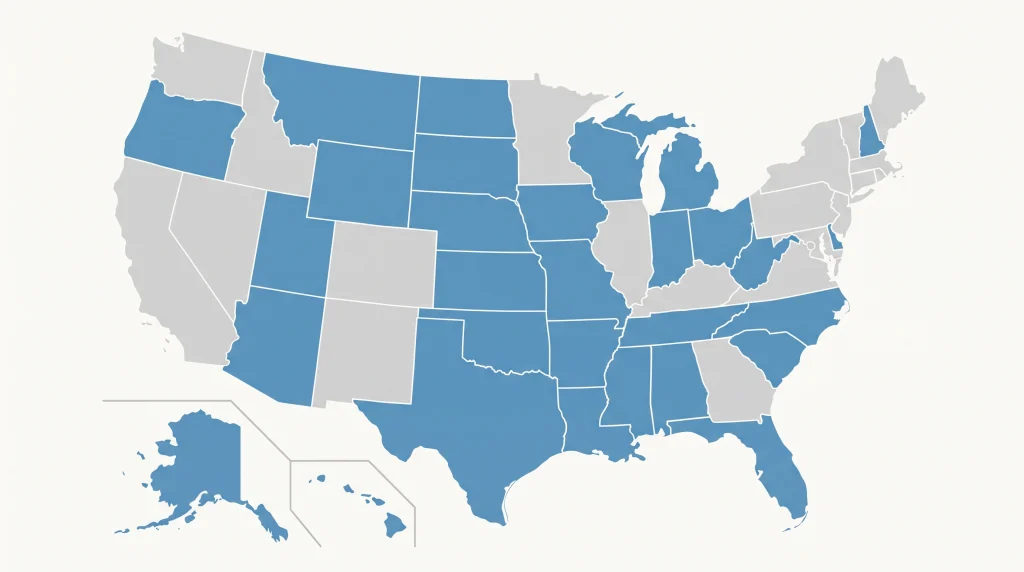
The other 20 states and Washington, D.C., run their own marketplaces, so enrollees there buy coverage through a state website rather than HealthCare.gov. Residents of those states won’t receive checks because the federal government didn’t collect user fees there.
Be careful with online lists. At least one article circulating today listed Pennsylvania among eligible states, but it doesn’t appear on the White House’s list. Always check the list against the White House fact sheet.
When Will Trump ACA Refund Checks Arrive?
Payments began going out on September 30, according to an administration official. The White House’s own fact sheet says checks will reach eligible Americans beginning in October 2026, and some reports say most should begin arriving in October.
There is no public, person-by-person delivery schedule. Mail and bank processing times vary, so there’s no way to say exactly which day any one check will land.
Do You Need to Apply for the ACA Refund?
No. The administration says it has already identified eligible recipients, and eligible people do not need to apply because payments are sent automatically.
That matters for scam protection. If anyone asks you to sign up, pay a fee, or “verify” information to get this payment, treat it as a red flag.
How Will You Receive the $500 Payment?
Reports differ slightly here. In his video announcement, Trump said recipients would get a check sent to their home address. In September, however, the White House told Healthcare Brew the payments would be sent by direct deposit. The most recent reporting from CNBC says some families will receive checks or direct deposits.
What’s consistent across reporting: the payments come from the Treasury Department and arrive with a letter signed by the president. The administration hasn’t publicly explained who gets a paper check versus a deposit.
Where Does the ACA Refund Money Come From?
What the administration says: The payments come from surplus user fees collected during the Biden administration. Reporting puts the total at about $500 million.
What independent reporting and experts say: Several health policy researchers have challenged parts of that explanation.
- Timing of the surplus. KFF’s Cynthia Cox has noted that about $1.2 billion in unspent user-fee money had already built up by the time President Biden took office in early 2021, and she has questioned whether it’s fair to call the refunds a Biden-era overcharge.
- Fee rates. According to Kiplinger, the fee was 1.5% of premiums for 2025 and was increased to 2.5% for 2026. Those rates were set roughly a year ahead, in anticipation of higher costs and lower enrollment after enhanced subsidies expired.
- Spending decisions. Healthcare Brew reported that user fees have historically paid for services like the navigator enrollment-help program, and that cuts to that program effectively freed up hundreds of millions of dollars. STAT News reported that the payments reflect the administration’s decision to cut enrollment-assistance funding, as well as the expiration of the extra subsidies.
- Precedent and legal basis. Experts told Reuters and Stat that the move appears unprecedented. STAT also reported that it wasn’t clear whether the move was legal.
- How $500 was calculated. One expert quoted by Moneywise described it as a flat payment from an aggregate surplus rather than a refund of each person’s documented overpayment. Questions have also been raised about how the $500 figure was arrived at.
What the administration has said about the future: A White House official told Healthcare Brew that CMS issued a rule lowering the fees going forward so the government doesn’t collect more than it needs again.
Political context: The checks are going out about five weeks before the November congressional elections. Democrats have accused the White House of trying to buy votes with both this program and the proposed $5,000 dividend. The administration presents the payments as returning money that belongs to consumers.
Is the $500 ACA Refund the Same as the Premium Tax Credit?
No, and the difference explains why most ACA enrollees won’t get a check.
The Premium Tax Credit is the main form of “premium assistance.” The IRS describes it as a refundable tax credit that helps eligible people afford Marketplace coverage. Most enrollees receive it in advance, paid directly to their insurer to lower their monthly bill, and then reconcile it on their tax return.
The $500 payment is a separate, one-time payment funded by the user-fee surplus. It’s going specifically to people who didn’t receive the Premium Tax Credit. It’s not a tax refund, not part of your tax return, and not an adjustment to your premium assistance.
Is the $500 ACA Refund Taxable?
As of September 30, the IRS and Treasury have not publicly explained how these payments will be treated for tax purposes. The name “refund” doesn’t settle the question on its own.
If you receive a payment, keep the letter and payment record. If you have questions about your own taxes, a tax professional can help, and it’s worth watching for any IRS guidance before filing season.
Is the ACA Refund the Same as Trump’s $5,000 Dividend?
No. They’re separate.
The $500 payments are an administrative program already underway. The $5,000 “Trump dividend” is a proposal. Trump promised it to every adult citizen if Republicans win both the House and Senate in November. House Speaker Mike Johnson has said it would need congressional approval. Senate Majority Leader John Thune has noted there is no specific proposal yet.
In short: the $500 payments are being sent now to a limited group. The $5,000 payment is a campaign promise that would require Congress to act.
What If You Don’t Receive Your Check?
No official lookup tool, appeals process or inquiry line specifically for these payments has been announced as of September 30.
Practical steps for now:
- Remember that most ACA enrollees are not eligible, including anyone who received premium tax credits or bought coverage through a state-run exchange.
- Allow time. Payments began September 30 and the White House has described delivery as beginning in October.
- Make sure your mailing address is current with the marketplace and the Postal Service.
- Watch official sources (WhiteHouse.gov and HealthCare.gov) for any announcement of an inquiry process.
How to Avoid ACA Refund Check Scams
Any widely publicized government payment attracts scammers. Keep these points in mind:
- You don’t need to apply, so any “application” is suspect.
- No one should charge a fee to deliver a government payment.
- Don’t share your Social Security number or bank details with anyone who contacts you unexpectedly about this payment.
- Be wary of texts and emails with links, especially ones pressuring you to act quickly.
- Check web addresses carefully. Official U.S. government sites end in .gov.
- Hang up on callers demanding immediate action, then look up official contact information yourself.
If you think you’ve been targeted, you can report it to the Federal Trade Commission at ReportFraud.ftc.gov.
Latest Trump ACA Refund Check Update
As of September 30, 2026:
- The Treasury began sending $500 payments to more than 950,000 people in 30 states, according to an administration official.
- Payments are going to HealthCare.gov enrollees who didn’t receive premium assistance, primarily higher earners.
- No application is required.
- Tax treatment and an inquiry process have not been announced.
- Experts continue to dispute the administration’s description of the fee surplus as a Biden-era overcharge.
This is a developing story. We’ll update it as the administration, Treasury or IRS release more details.
Frequently Asked Questions
Who qualifies for Trump ACA refund checks?
People who bought ACA coverage through HealthCare.gov in one of 30 states and did not receive premium assistance. The administration says the group is mainly people earning over 400% of the federal poverty level, plus some lower earners who didn’t receive subsidies.
How much is the ACA refund?
$500 per eligible person. Households with more than one eligible person may receive more than one payment.
When will the $500 checks arrive?
Payments began going out September 30, and the White House says they’ll reach recipients beginning in October 2026. No individual delivery schedule has been published.
Which states are receiving the checks?
Alabama, Alaska, Arizona, Arkansas, Delaware, Florida, Hawaii, Indiana, Iowa, Kansas, Louisiana, Michigan, Mississippi, Missouri, Montana, Nebraska, New Hampshire, North Carolina, North Dakota, Ohio, Oklahoma, Oregon, South Carolina, South Dakota, Tennessee, Texas, Utah, West Virginia, Wisconsin and Wyoming.
Do I need to apply?
No. The administration says eligible recipients were identified automatically.
Will everyone with ACA insurance receive a check?
No. People who received premium tax credits, which is most enrollees, and people in states with their own marketplaces aren’t included.
Is the $500 ACA refund taxable?
The IRS and Treasury haven’t publicly addressed it as of September 30.
Is this money related to the Premium Tax Credit?
No. It’s a separate one-time payment from surplus user fees, sent to people who did not receive the tax credit.
Is the ACA refund the same as Trump’s $5,000 dividend?
No. The $5,000 dividend is a proposal that would require congressional approval. The $500 payments are already being sent.
How can I tell if an ACA refund message is legitimate?
You don’t need to apply or pay anything. Be suspicious of anyone asking for fees, your Social Security number or bank details, and check information on official .gov websites.
Sources
- The White House fact sheet: Administration’s rationale, eligibility, 30-state list, $500 amount, October timing.
- USA Today via Yahoo News: September 30 start, 950,000 recipients, Trump letters, reason other states are excluded.
- USA Today via AOL: Text of the letter accompanying the payments.
- CNBC, September 30: Income groups targeted, multiple checks per household, checks or direct deposits.
- CNBC, September 10: KFF’s Larry Levitt on who may qualify.
- Reuters via InsuranceNewsNet: How user fees work, recipients already identified.
- Healthcare Brew: Direct deposit statement, enrollment figures, navigator funding, future fee reductions, experts on precedent.
- The Hill: Roughly $500 million total from surplus user fees.
- Kiplinger: Trump’s statement on home delivery, user fee rates for 2025 and 2026.
- IBTimes UK: KFF analysis of surplus predating 2021 and Cynthia Cox’s comments.
- STAT News: Questions about eligibility and legal basis.
- Moneywise via NewsBreak: Expert characterizing payments as a flat amount from an aggregate surplus.
- Yahoo News: No application required, questions about the $500 calculation.
- Money.com: Democratic criticism of both payment plans.
- Quartz: Election timing context.
- PBS News (AP): $5,000 dividend requiring congressional approval.
- The Hill: Senate Majority Leader John Thune’s comments on the $5,000 proposal.