
Dumbbell Exercises for Weight Loss at Home: A Beginner’s Guide
If you have a pair of dumbbells and want to use them to support weight loss, you don’t need a gym or a complicated program. A handful of basic dumbbell exercises, done two or three times a week, covers every major muscle group from your living room.
Here’s the honest part. Dumbbells won’t cause weight loss on their own. Weight loss depends on your overall energy balance: what you eat, how active you are, your sleep and other factors. What dumbbell exercises for weight loss can do is help you keep or build muscle, add to your weekly activity, and make you stronger while you lose weight. This guide shows you which exercises to start with, how to do them safely, and how to fit them into your week.
Safety note: This guide is general information, not personal medical advice. If you have an injury, a heart, joint or other health condition, are pregnant or recently gave birth, or aren’t sure exercise is safe for you, talk to a doctor or qualified professional before starting.
Can Dumbbell Exercises Help With Weight Loss?
Short answer: Yes, as part of a broader plan. Dumbbell exercises use energy and help you keep muscle while you lose weight. But your eating habits and total activity matter more for the number on the scale.
Here’s what the evidence supports:
- Muscle matters during weight loss. When people lose weight, some of what they lose can be muscle. The American College of Sports Medicine (ACSM) notes that resistance training doesn’t greatly increase weight loss by itself, but it may increase lean mass and fat loss.
- It adds to your weekly activity. Every workout uses energy, and Mayo Clinic notes that strength training can help you manage weight and improve body composition.
- It meets a health guideline. The CDC recommends that adults do muscle-strengthening activity that works all major muscle groups at least 2 days a week, along with 150 minutes of moderate aerobic activity.
For a wider look at why lifting helps, see our guide to strength training for weight loss. This article focuses on the specific dumbbell moves you can do at home.
Why Use Dumbbells at Home?
Advantages
- They’re fairly inexpensive and take up little space.
- One pair can train your legs, back, chest, shoulders and core.
- You can increase the weight gradually as you get stronger.
- A full workout can take about 30 minutes.
Limitations
- They don’t replace cardio for heart and lung fitness.
- You have to learn the technique, and nobody is there to correct you.
- Fixed-weight dumbbells can make small increases difficult. Adjustable dumbbells or a second pair can help.
- Heavier isn’t automatically better.
How Heavy Should Your Dumbbells Be?
There’s no single right weight. It depends on the exercise, your strength and your experience. Legs can usually handle more weight than shoulders, for example.
Mayo Clinic suggests choosing a weight heavy enough to tire your muscles in about 12 to 15 repetitions. In practice:
Too light: you could easily do 20 or more reps, and the last few feel the same as the first.
About right: you finish the set with good form, and the last two or three reps feel challenging.
Too heavy: you have to swing, lean back, rush or shorten the movement to finish, or you can’t complete the reps safely.
Many beginners own one light and one moderate pair. Use the moderate pair for squats, deadlifts and rows, and the light pair for shoulder presses.
Best Dumbbell Exercises for Weight Loss at Home
These nine dumbbell exercises for beginners cover the main movements: squatting, hinging, lunging, pulling, pushing and carrying. Start with the first six. Add the others when those feel comfortable.
Breathing for all exercises: breathe out during the hardest part of the move, and breathe in as you return. Don’t hold your breath.
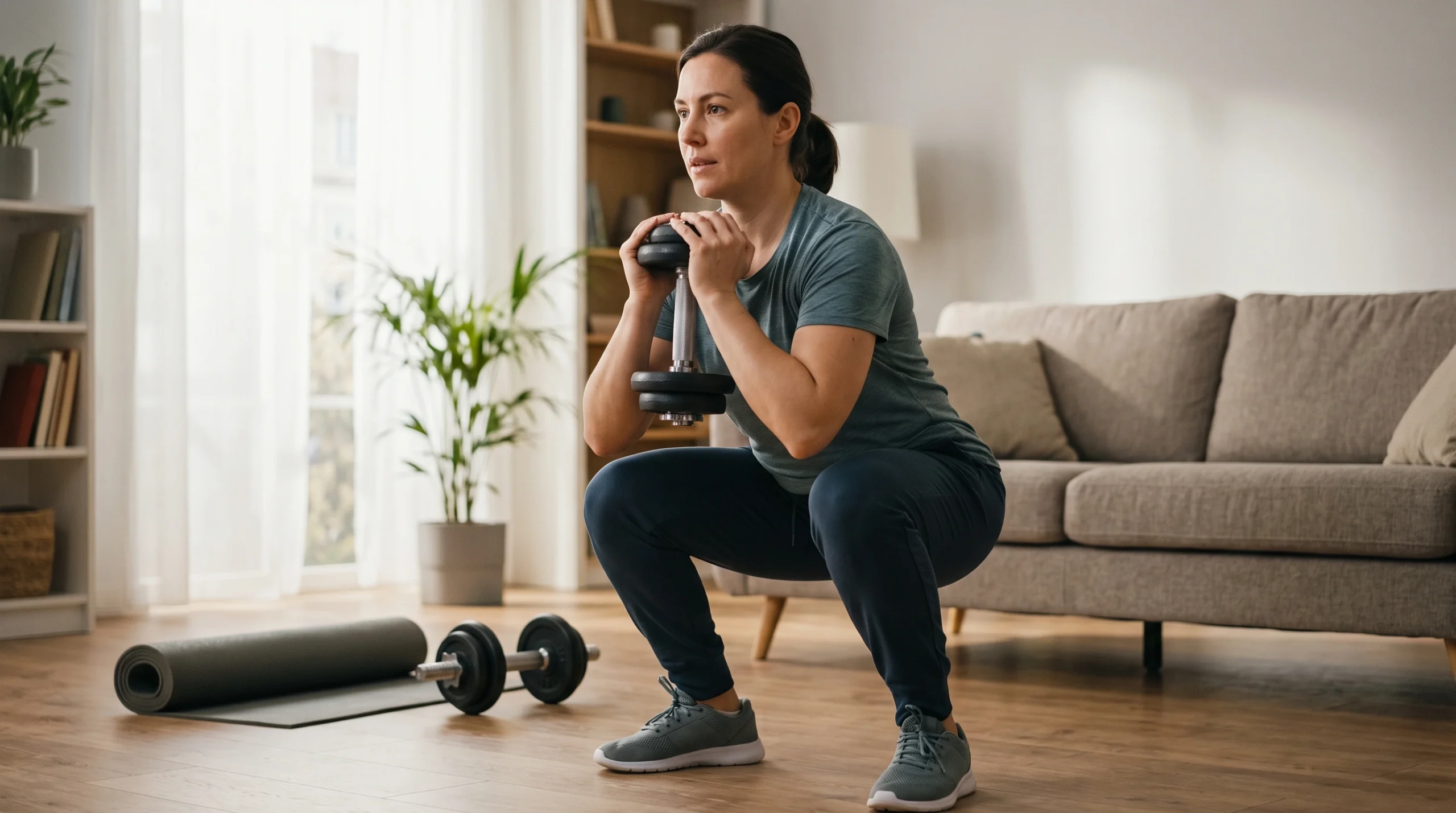
1. Dumbbell Goblet Squat
Works: thighs, glutes, core
How to do it:
- Hold one dumbbell vertically against your chest with both hands. Stand with your feet about shoulder-width apart.
- Push your hips back, bend your knees, and lower as far as feels comfortable with your chest up.
- Press through your whole foot to stand back up.
- Breathe in on the way down and out on the way up.
Beginner tip: squat down to a chair or sofa edge until the movement feels natural.
Common mistake: letting your knees cave inward. Keep them in line with your toes.
2. Dumbbell Romanian Deadlift
Works: hamstrings, glutes, lower back
How to do it:
- Stand holding a dumbbell in each hand in front of your thighs. Keep your knees slightly bent.
- Push your hips back and slide the weights down your legs. Keep your back flat and the weights close to you.
- Stop when you feel a stretch in the back of your thighs, usually around mid-shin. Then squeeze your glutes to stand up.
- Breathe in as you lower and out as you stand.
Beginner tip: think “hips back,” not “bend down.”
Common mistake: rounding your back to reach lower. Only go as far as you can with a flat back.
3. Dumbbell Reverse Lunge
Works: thighs, glutes, balance
How to do it:
- Stand tall with a dumbbell in each hand at your sides.
- Step one foot back and lower until both knees are bent to about 90 degrees, or as far as comfortable.
- Push through your front foot to return to standing. Alternate legs.
- Breathe in as you lower and out as you rise.
Beginner tip: do it without weights first, holding a wall or chair for balance.
Common mistake: taking a step that’s too short, which puts extra stress on the front knee.
4. Dumbbell Bent-Over Row
Works: upper back, lats, biceps
How to do it:
- Hold a dumbbell in each hand. Hinge at the hips until your torso leans forward at about 45 degrees, with your back flat.
- Pull the dumbbells toward your lower ribs, keeping your elbows close.
- Lower slowly until your arms are straight.
- Breathe out as you pull and in as you lower.
Beginner tip: for more support, rest one hand on a sturdy chair and row with the other arm.
Common mistake: jerking your body to lift the weight. If you need momentum, use a lighter dumbbell.
5. Dumbbell Floor Press
Works: chest, shoulders, triceps
You don’t need a bench. The floor limits how far your elbows can drop, which makes this a good starting option.
How to do it:
- Lie on your back with your knees bent and a dumbbell in each hand. Rest your upper arms on the floor, with your elbows at about 45 degrees from your body.
- Press the dumbbells up until your arms are straight above your chest.
- Lower slowly until your upper arms lightly touch the floor.
- Breathe out as you press and in as you lower.
Beginner tip: sit down holding the weights on your thighs before lying back. Don’t lift heavy dumbbells off the floor while lying down.
Common mistake: letting your elbows flare straight out to your sides.
6. Dumbbell Shoulder Press
Works: shoulders, triceps, upper back
How to do it:
- Sit or stand holding the dumbbells at shoulder height with your palms facing forward or toward each other.
- Press them overhead until your arms are almost straight.
- Lower slowly back to shoulder height.
- Breathe out as you press and in as you lower.
Beginner tip: sitting in a sturdy chair with back support helps you avoid leaning back.
Common mistake: arching your lower back to push the weight up. Brace your stomach and use a lighter weight if needed.
7. Dumbbell Glute Bridge
Works: glutes, hamstrings
How to do it:
- Lie on your back with your knees bent and feet flat. Rest one dumbbell across your hips, holding it in place with both hands.
- Squeeze your glutes and lift your hips until your body forms a straight line from knees to shoulders.
- Pause, then lower slowly.
- Breathe out as you lift and in as you lower.
Beginner tip: place a folded towel under the dumbbell for comfort.
Common mistake: pushing up by arching your lower back instead of using your glutes.
8. Dumbbell Farmer Carry
Works: grip, shoulders, core, posture
How to do it:
- Hold a dumbbell in each hand at your sides. Stand tall with your shoulders back.
- Walk slowly in a straight line for about 20 to 30 seconds, or the length of a room and back.
- Turn carefully and walk back, then put the weights down with control.
- Breathe steadily the whole time.
Beginner tip: clear the floor first. Socks on smooth floors can slip, so wear shoes or go barefoot.
Common mistake: leaning to one side or letting your shoulders round forward.
9. Dumbbell Squat to Press (after a few weeks)
Works: legs, glutes, shoulders, core
This combines a squat and a shoulder press, so it’s more demanding. Add it once you’re comfortable with both moves separately.
How to do it:
- Hold the dumbbells at shoulder height.
- Squat down as in the goblet squat.
- As you stand up, press the weights overhead in one smooth motion.
- Lower the weights to your shoulders before the next rep. Breathe out as you stand and press.
Beginner tip: use your lighter pair. Your shoulders limit the weight here, not your legs.
Common mistake: rushing the reps until your form breaks down.
Beginner Dumbbell Workout for Weight Loss
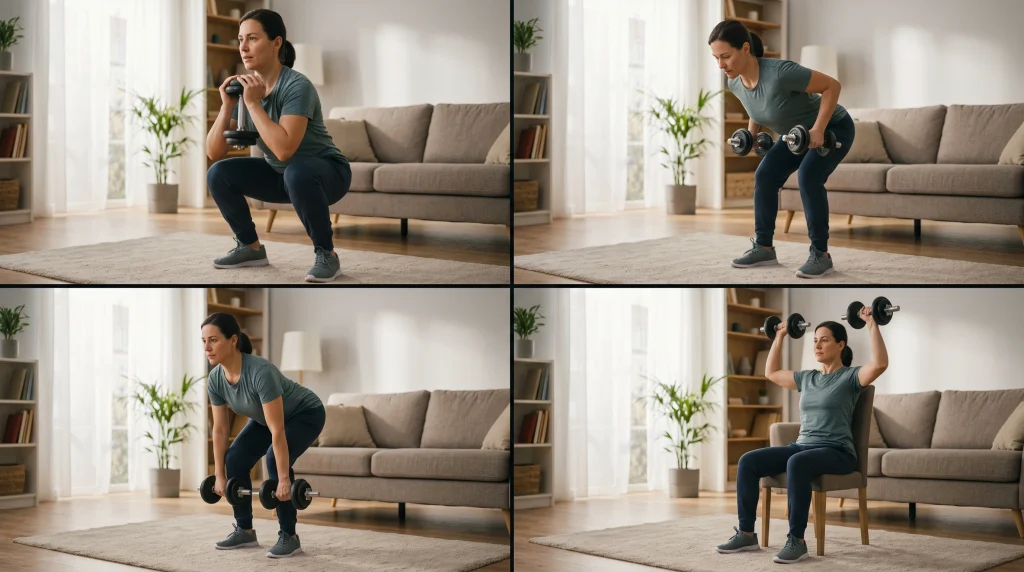
Here’s a simple full-body dumbbell workout. Expect it to take about 30 to 40 minutes, including the warm-up.
Warm-up (5 to 10 minutes): walk briskly or march in place, then do arm circles, hip hinges and a few squats without weights.
| Exercise | Sets x reps |
|---|---|
| Goblet squat | 2 x 8 to 12 |
| Romanian deadlift | 2 x 8 to 12 |
| Bent-over row | 2 x 8 to 12 |
| Floor press | 2 x 8 to 12 |
| Shoulder press | 2 x 8 to 12 |
| Farmer carry | 2 x 20 to 30 seconds |
Rest: 60 to 90 seconds between sets, or longer if you need it.
Cool-down: walk slowly for a few minutes, then do some gentle stretches.
The 8 to 12 rep range follows ACSM guidance for beginners. If you’re brand new, one set of each exercise is a good way to start. Mayo Clinic notes that a single set of 12 to 15 reps with the right weight can build muscle effectively. This isn’t the only good routine. It’s a balanced, simple starting point you can adjust.
To see how these sessions fit alongside walking and other activity across a week, use our beginner weight-loss workout plan.
How Often Should You Do Dumbbell Workouts?
Two or three times a week, on non-consecutive days, works well for beginners. ACSM recommends 2 to 3 days a week for beginners. Mayo Clinic suggests resting one full day between training the same muscle group.
A simple schedule is Monday and Thursday, or Monday, Wednesday and Friday.
You don’t need to lift every day. Muscles get stronger during recovery, so extra sessions early on mostly increase soreness and injury risk. On other days, walking or light activity is a good way to stay active.
How to Progress Your Dumbbell Workouts
Your body adapts, so the workout needs to get gradually harder. This is called progressive overload. Try these in roughly this order:
- Improve your technique. Smooth, controlled reps come first.
- Add reps. Work up to the top of your rep range, such as 12.
- Add weight. ACSM suggests increasing the load when you can do one or two reps more than your target. With dumbbells, that usually means moving to the next weight up.
- Add a set. Go from 1 to 2, or 2 to 3 sets.
- Slow down. Taking 2 to 3 seconds to lower the weight makes it harder without adding weight.
- Shorten rests a little, but only if your form stays solid.
Only change one thing at a time. If your form gets worse, go back a step.
Dumbbells and Cardio for Weight Loss
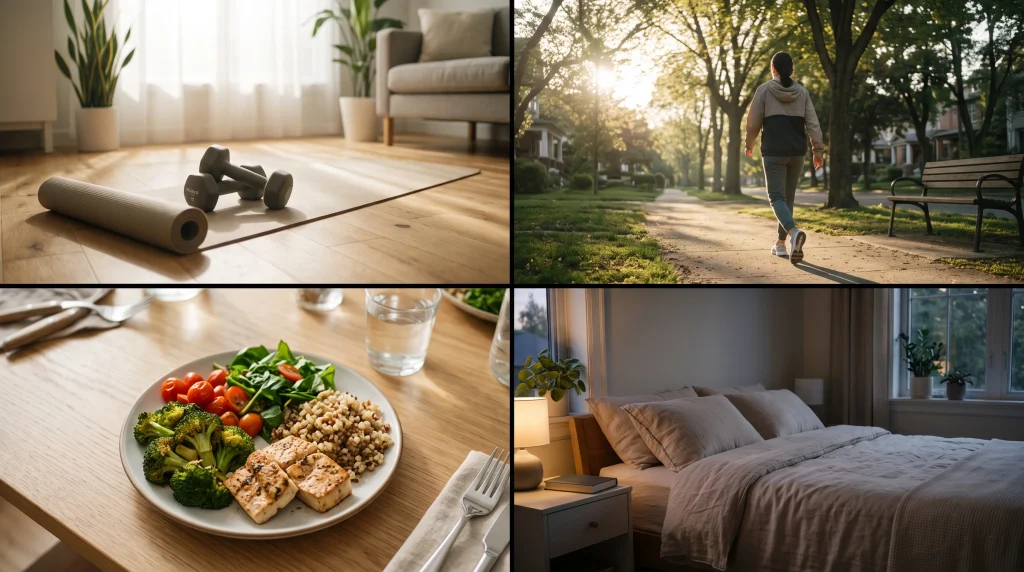
You don’t have to choose between strength training and cardio for weight loss. They do different jobs:
- Dumbbell workouts build strength and help you keep muscle.
- Walking, cycling, running or other cardio add more activity over the week and support heart health.
The CDC recommends both: at least 150 minutes of moderate aerobic activity, such as brisk walking, plus 2 days of strength training each week. Short walks after meals and on your non-lifting days are an easy way to build up your weekly minutes.
How Nutrition Fits Into Dumbbell Workouts for Weight Loss
Exercise helps, but your eating habits usually have the biggest effect on weight loss. A few basics:
- A modest calorie reduction, not extreme restriction
- Enough protein at meals, which supports muscle while you train
- Mostly nutrient-dense foods, such as vegetables, fruit, whole grains, beans, fish, eggs and lean meats
- Enough water, especially around workouts
- Habits you can keep for months, not just a few weeks
If you have a medical condition or a history of disordered eating, a registered dietitian or your doctor can help you make a safe plan.
Common Beginner Mistakes
- Going too heavy too soon. Start lighter than you think.
- Rushing reps. Lift with control and lower slowly.
- Swinging the weights. Momentum takes work away from your muscles.
- Rounding your back during deadlifts and rows.
- Skipping the warm-up.
- Training the same muscles hard every day, without time to recover.
- Pushing through pain. Muscle effort is normal. Sharp pain is not.
- Changing your routine every week. Stick with the same exercises long enough to make progress.
- Ignoring food and daily movement, and relying on workouts alone.
- Expecting fast results. Strength usually improves within weeks. Weight changes are slower and uneven.
How Women Can Use Dumbbells for Weight Loss
If you’re searching for the best exercise for weight loss at home for women, the same dumbbell exercises in this guide apply. Women don’t need a separate set of “toning” exercises. The same basic principles of resistance training work for everyone.
What you can adjust is the starting weight, the exercises you choose and how quickly you progress, based on your experience, strength, comfort, goals and any physical limitations. Light weights don’t do anything special for “toning,” and lifting moderate weights is safe and effective for most people. If you’re pregnant or have recently given birth, get advice from your healthcare provider about which exercises are right for you.
When Should You Stop or Modify an Exercise?
Normal: muscle burning, heavy breathing, tired muscles and soreness one or two days later.
Modify the exercise: if a joint feels uncomfortable or you can’t keep good form. Use a lighter weight, reduce how far you move, or switch to an easier version, such as a bodyweight squat or a supported row.
Stop right away: if you feel sharp or severe pain, dizziness or faintness, chest pain, or shortness of breath that feels unusual for the effort. The UK’s Faculty of Sport and Exercise Medicine advises stopping and getting urgent medical attention for chest pain that doesn’t settle when you stop. If a symptom is severe or doesn’t go away, contact emergency services.
FAQ
Are dumbbell exercises good for weight loss?
They can help as part of a plan that also includes healthy eating and regular activity. Their main benefit is helping you keep muscle and get stronger while you lose weight.
Can I lose weight using dumbbells at home?
Yes, if they’re part of a broader approach. Home dumbbell workouts plus walking and sensible eating can support weight loss. Dumbbells alone usually aren’t enough.
What dumbbell exercises burn the most calories?
There’s no reliable ranking. Exercises that use large muscle groups, such as squats, lunges, deadlifts and the squat to press, generally take more effort. But being consistent matters more than choosing one exercise.
How heavy should dumbbells be for beginners?
Heavy enough that the last two or three reps of a set feel challenging while your form stays good. That’s different for each person and each exercise.
How many days a week should I do dumbbell workouts?
Two or three days on non-consecutive days is a good place to start.
Can I do dumbbell exercises every day?
It’s not necessary for beginners. Your muscles need recovery time, so walk or do light activity on your days off.
How long should a beginner dumbbell workout last?
Around 30 to 40 minutes, including the warm-up and cool-down, is plenty.
Do I need heavy dumbbells to lose weight?
No. The right weight is one that challenges you with good form. Increase it gradually as you get stronger.
Should I do cardio or dumbbell exercises for weight loss?
Both. Cardio adds activity and supports heart health, and dumbbells help you keep muscle. Health guidelines recommend doing both each week.
Conclusion
Dumbbell exercises for weight loss are a practical way to add strength training at home. They work best as one part of a bigger approach that includes sensible eating, regular walking or other activity, rest and habits you can keep. Start light, focus on good form, train two or three times a week, and progress gradually. When you’re ready for a broader starting point, our upcoming Beginner Fitness Guide will bring all of this together.
Sources
- CDC: Adult Activity, An Overview, on the 150 minutes of aerobic activity and 2 days of muscle-strengthening a week
- ACSM Position Stand: Progression Models in Resistance Training (PubMed), on 8 to 12 reps, 2 to 3 days a week for beginners and when to increase the load
- ACSM Position Stand: Physical Activity for Weight Loss (PubMed), on resistance training, lean mass and fat loss
- Mayo Clinic: Strength training, get stronger, leaner, healthier, on choosing a weight, single sets, rest days, warming up and weight management
- NHS: Physical activity guidelines for adults, on strength activities on at least 2 days a week for all major muscle groups
- Moving Medicine (Faculty of Sport and Exercise Medicine UK): Chest pain, on stopping and getting urgent help for chest pain during activity



2 Comments